
Venue
The Congress will be held on the campus of Siberian Federal University (SFU) — in the October district of Krasnoyarsk. This is a separate university quarter on high ground, half an hour’s drive from the center, located in a beautiful birch grove next to the Gremyachaya Griva nature park.
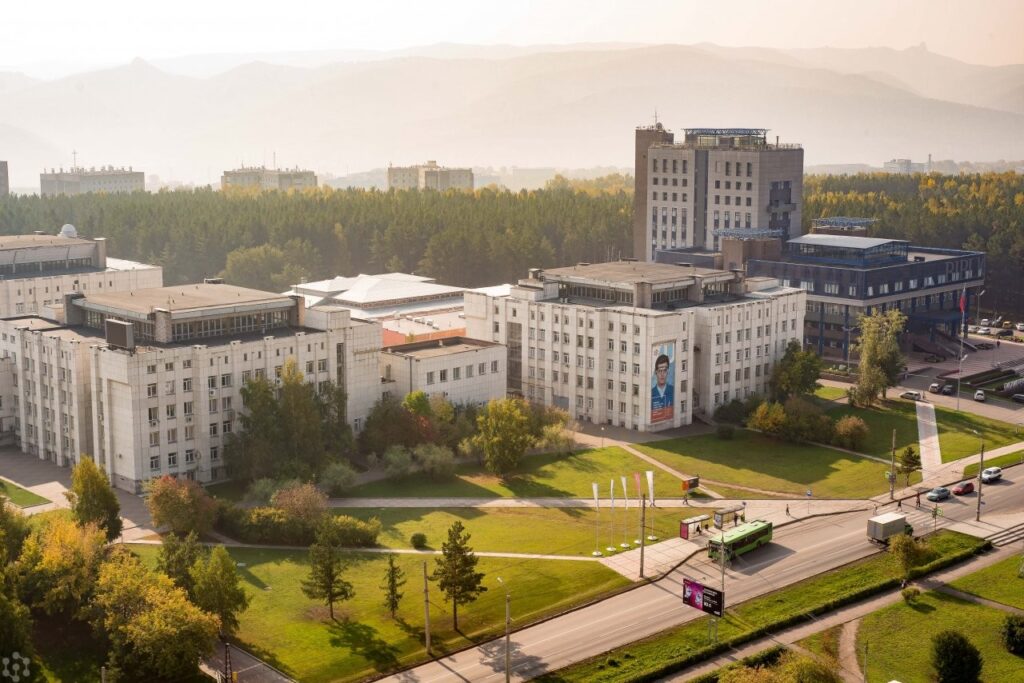
University
SFU was established in 2006 and became one of the first federal universities in the country. It merged several leading Krasnoyarsk universities: the Krasnoyarsk State University and the Krasnoyarsk State Technical University, the Krasnoyarsk State University of Non-Ferrous Metals and Gold, and the Krasnoyarsk State Architectural and Civil Engineering Academy; later the Krasnoyarsk State Trade and Economics Institute was included in its structure. So behind the young university’s name stand engineering and scientific schools that are fifty to seventy years old.
Today more than 28 thousand students from 71 regions of Russia study at SFU. The university offers over 200 bachelor’s and master’s programs, more than half of which are engineering disciplines, and postgraduate studies are open in 113 fields. The university carries out research and development work worth more than 1.2 billion rubles per year, and graduate employment stays at 92%. In the UI GreenMetric World University Ranking the university ranks 50th in the world and 2nd in Russia.
The university comprises about twenty institutes, including the Institute of Mathematics and Fundamental Informatics, the Polytechnic Institute, the Institute of Oil and Gas, the Institute of Non-Ferrous Metals, the Institute of Fundamental Biology and Biotechnology, the Institute of Ecology and Geography, as well as the institutes of civil engineering, mining and geology, engineering physics and radio electronics, space and information technologies, architecture and design, and the humanities and law. In terms of scientific content, the Congress’s topics are close to the disciplines taught at the Institute of Mathematics and Fundamental Informatics, which includes the educational and research laboratory of fundamental and applied mechanics, the laboratory of computational geophysics and the Krasnoyarsk Mathematical Center. Strength and design problems are also addressed by the Polytechnic and Civil Engineering institutes.
Campus
The campus is, in essence, a city within a city: teaching and laboratory buildings, research labs, 26 dormitories, a library, a medical center, cafés, sports facilities, parks and squares. The total territory is more than 810 thousand square meters. Much was inherited from the 2019 Winter Universiade: swimming pools, an athletics arena, ski tracks and a ski resort complex. The SFU campus has been awarded the FISU platinum certificate “Healthy Campus».
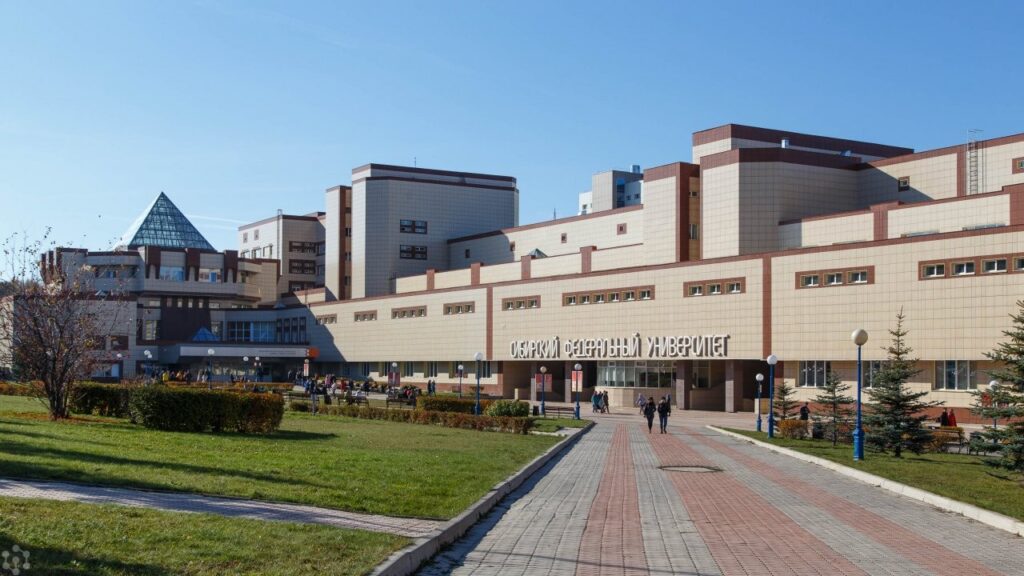
The main campus buildings stand along Svobodny Avenue (at Svobodny, 79 and Svobodny, 82); they consist of several buildings connected by covered passages, and walking between the extreme points of the main buildings takes ten to fifteen minutes. The university also owns buildings on Akademika Kirenskogo Street and sites in other districts — on the right bank of the Yenisei and in the city center.
Scientific Library
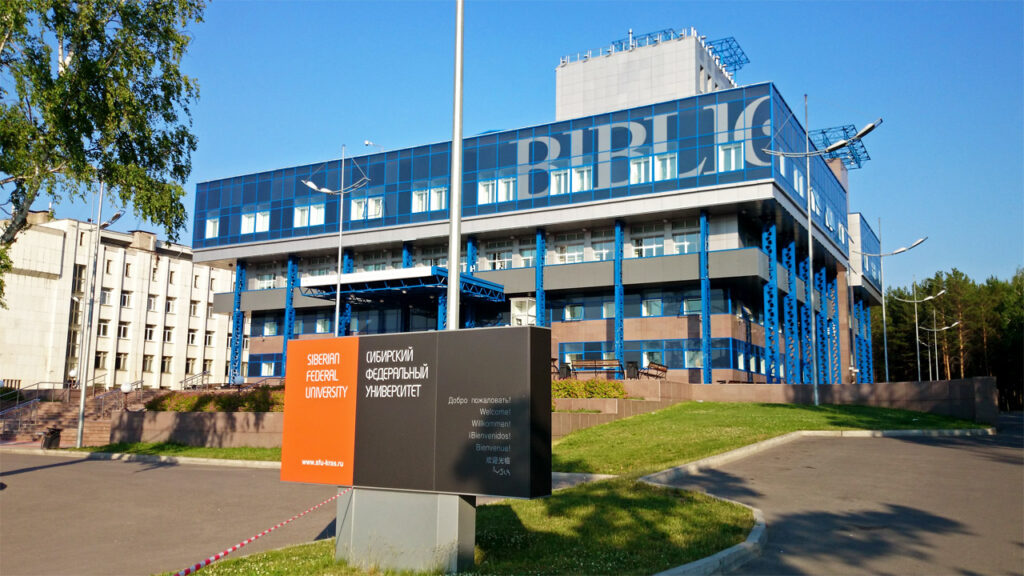
The library was assembled in 2007 from five university libraries — of the technical university (founded in 1956), the university of non-ferrous metals and gold (1959), the state university (1964), the trade and economics institute (1974) and the architecture and civil engineering academy (1982). A new four-story building at Svobodny Avenue, 79/10 opened in 2010 and became one of the symbols of the campus. The SFU library is currently the largest university library east of the Urals.
The library’s collection contains about one and a half million printed and electronic publications, with books in 42 languages. Readers have access to nine lending departments and thirteen reading rooms, including the first reading room in Krasnoyarsk of the Yeltsin Presidential Library. More than sixty electronic databases are available, and remotely: a reader obtains an account and works with the resources from anywhere. The university teaches more than ten thousand disciplines in almost fifty broad groups of specialties, and literature must be provided for each of them.
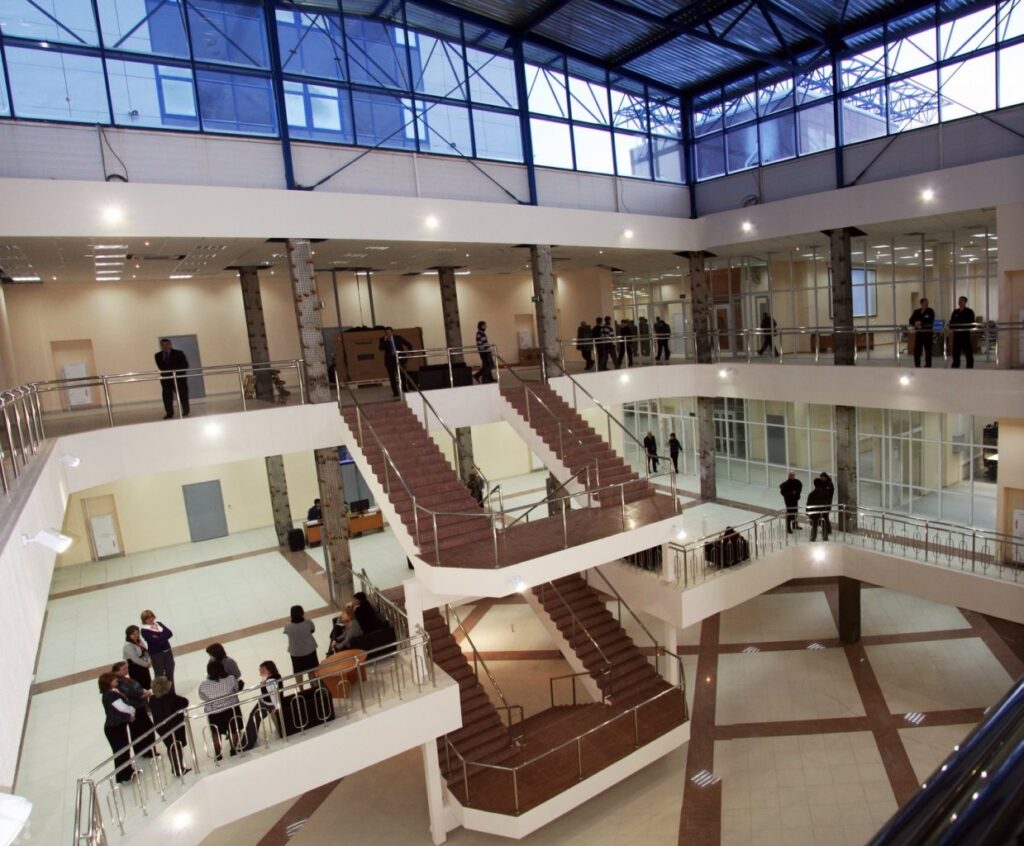
There are also rarities. The oldest book is Montesquieu’s “The Spirit of Laws” of 1775; the collection holds a lifetime edition of Pushkin’s “The Robber Brothers”. Especially worth mentioning, and directly related to the subject of the Congress: the library holds about two thousand books by Academician Naum Petrovich Abovsky on structural mechanics and the theory of elasticity, and on the basis of this collection a memorial study-library has been opened at the Civil Engineering Institute. Abovsky (1929–2012) was a Doctor of Technical Sciences and professor; in 1963 he founded the department of structural mechanics at the Krasnoyarsk Polytechnic Institute and headed it for forty-five years.
The technical side is also interesting. The digitization center has a robotic scanner: a mechanical arm with a vacuum suction cup turns the pages, and scanning proceeds at up to two thousand pages per hour — rare books and textbooks are digitized on request from departments. Paper and plastic reader cards were abolished long ago: everything is kept in a mobile app. Anyone living in the city can register at the library, not only students and staff, and the second floor has workstations for readers with disabilities — with magnifiers and devices for reading books aloud.
Congress Hall
The building at Svobodny Avenue, 82, building 9 was conceived as the university’s palace of culture — even before Krasnoyarsk received the right to host the Universiade. Construction was completed at the end of 2015, and the facility became the first building completed for the future student games. During the 2019 Universiade, the Main Information Center, the Sports Information Center and the delegation services were located here.
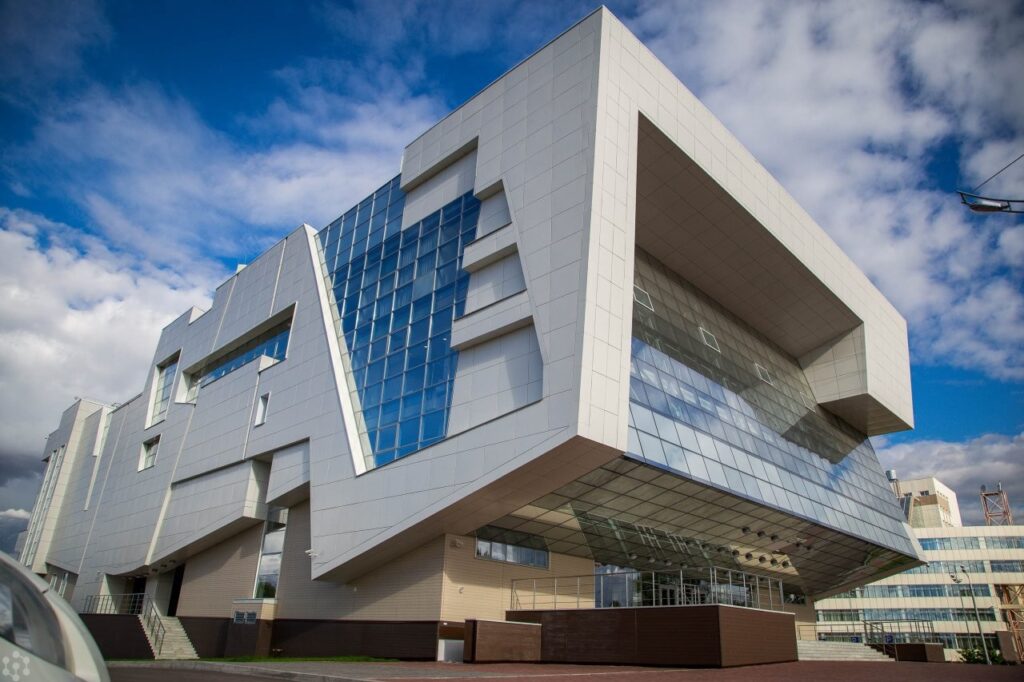
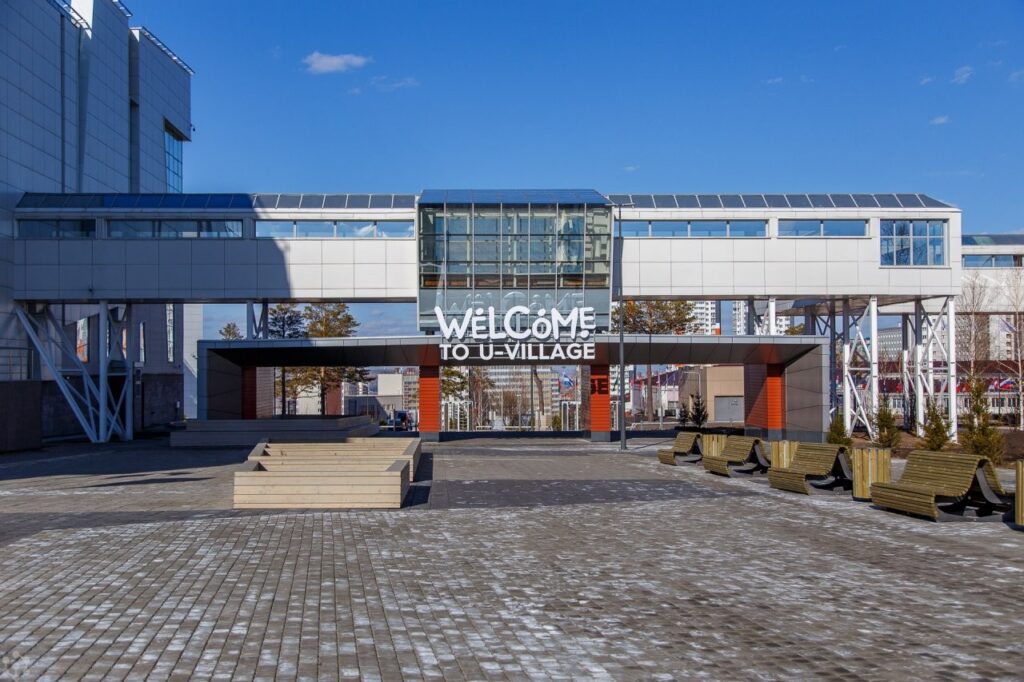
The total floor area of the four-story building is about 12,000 square meters; a covered passage connects it with neighboring buildings, so the complex works as a single whole. Inside are a concert hall, multipurpose rooms for negotiations and meetings, a coworking space, a banquet hall and an exhibition gallery; there is also a winter garden and a café.
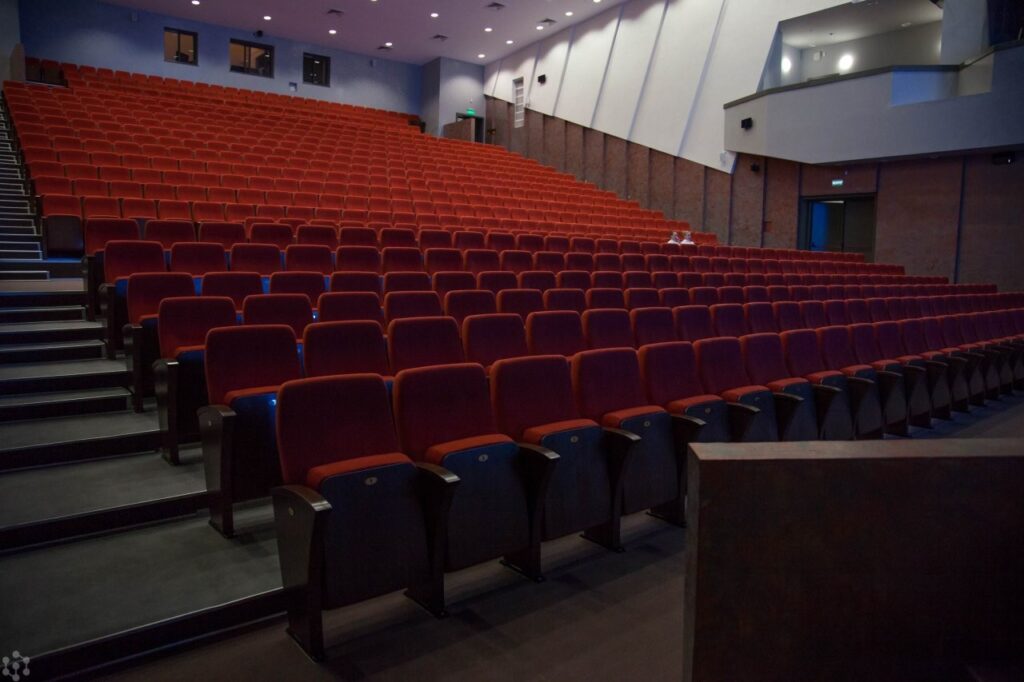
The main hall of the Congress Hall seats more than 600 people and is equipped with a videoconferencing system and a wireless simultaneous interpretation system. Besides university events, the main hall is used for other large-scale events — from the Krasnoyarsk Economic Forum and the «Енисей.РФ» media forum to concerts and festivals.